
Tank Gauging HMI
Embedded application to realise a fully digital tank gauging HMI solution, specifically for the marine industry.
-
Tech: Linux, Firmware, Web Front-end, Web API, Database

-
Time: 12 months

-
Languages: C++, C, Yocto, PHP, HTML, CSS, JS, SQL

-
Industry: Specialised Industry Solutions

Let's chat about your next project

The Brief
Our client, a specialist in the design, manufacture and supply of marine control instrumentation and marine protection systems, wanted to expand their product offering to include the supply of a digital tank gauging soluton. This would enable our client to offer a full end-to-end solution for their customers, coupling their industry-leading instrumentation products with a fully digital and modern HMI that collects, processes and presents tank measurement data.
Due to an excellent existing relationship, GB Logical were the chosen partner to design and develop the new product. The marine industry demands fast performance and complete reliability at all times, so this had to be taken into account at all stages of the development cycle.
Project Outcomes:
- Linux-based embedded system, with a 7" colour touch screen and custom built Debian operating system.
- All critical functionality developed in low-level C++ firmware, to ensure performance and resiliency.
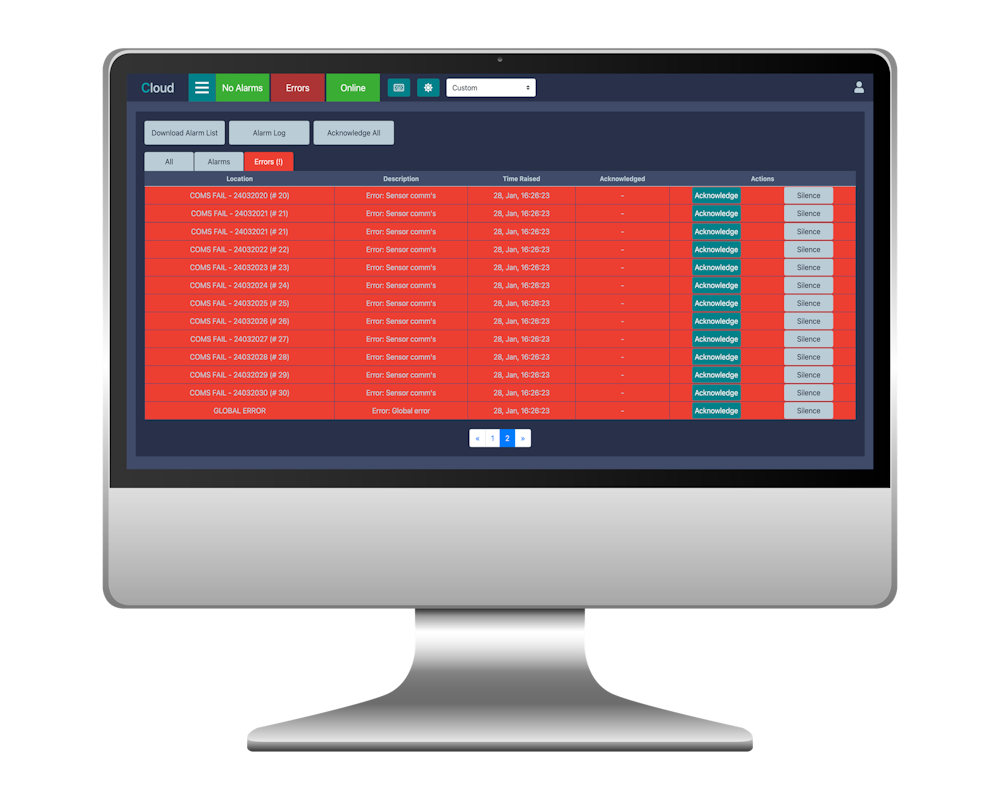
- Fully web-based front-end, accessible both on-device and off-device, through any standard web browser.
- Expansive configuration options, allowing for full flexibility of the system across a variety of installation types.
- Data fully retrievable from external devices, through a variety of methods, including Modbus and web API's.
Our Approach
We took a structured and methodical approach to developing the digital tank gauging solution, ensuring it met the stringent demands of the marine industry. Our first step was to work closely with the client to understand their specific requirements, including performance expectations, system reliability, and seamless integration with their existing instrumentation products.
Given the critical nature of marine control systems, we prioritized a robust and resilient architecture, selecting a Linux-based embedded system as the foundation. This allowed us to develop a custom-built Debian operating system, tailored to optimize performance and reliability.
To achieve real-time data processing and ensure system stability, we implemented all critical functionality in low-level C++ firmware, leveraging its performance and efficiency. The user interface was designed as a fully web-based front-end, providing intuitive access both on-device and remotely via any standard web browser. Extensive configuration options were built into the system, allowing it to adapt to a variety of installation environments. Throughout development, our focus remained on delivering a high-performance, scalable, and future-proof solution that enhances the client’s product offering.
The Solution
We chose Linux as the embedded operating system for this project for its stability, flexibility, and proven performance in embedded systems, essential for reliable marine applications. Its open-source nature allowed us to customize a Debian-based OS, optimizing security, networking, and real-time data processing. Linux’s broad hardware and protocol support, including Modbus and web APIs, ensured seamless integration with external devices. By leveraging Linux, we could provide a scalable and future-proof solution, giving our client the flexibility to expand and enhance their system over time without being locked into proprietary software limitations.

We developed the firmware in C++ to ensure high performance, efficiency, and reliability—key requirements for marine applications. C++ provides low-level control over hardware while offering modern programming features that enhance maintainability and scalability. Its strong memory management capabilities and direct hardware access allow for real-time data processing with minimal latency, ensuring critical system responsiveness. Additionally, C++'s object-oriented structure enabled modular development, making the firmware adaptable for future upgrades while maintaining robust performance and stability.
We chose a web-based front-end to provide a flexible, platform-independent interface that allows users to access the system both on-device and remotely via any standard web browser. This approach eliminates the need for proprietary software installations, simplifying deployment and maintenance. A web-based UI ensures seamless integration across different devices, including PCs, tablets, and smartphones, enhancing accessibility. Additionally, it enables real-time monitoring and control from remote locations, crucial for marine applications where off-site management and diagnostics improve efficiency and reduce operational downtime.

Explore More Projects
Stock Management System
