

 A stack of green PCBs with exposed copper connectors.
An embedded system combines dedicated hardware (microcontrollers or processors, memory, I/O peripherals) with specialised firmware to perform a specific task. In other words, it’s computer hardware and software designed for a particular function, often operating within a larger device (1). Embedded systems range from simple controllers (like a thermostat chip) to complex devices (such as the computer systems in a car). A hardware block diagram (for example) helps visualise how components (CPUs, sensors, actuators, communication modules) interconnect and are managed by firmware.
Importance and Use Cases
Embedded systems power a vast array of everyday technology. They are the “invisible brains” inside cars, appliances, medical devices, industrial machines and more. For instance, modern vehicles often contain dosens of embedded controllers: one car can have 50–100+ Electronic Control Units (ECUs) handling everything from engine management to airbags (2). In the home, microcontroller-driven appliances (smart refrigerators, thermostats, robotic vacuums) optimise comfort and efficiency; in industry, PLCs and embedded controllers automate manufacturing and utilities. According to Digi International, embedded software is crucial for cars, home appliances, medical devices, kiosks and “every facet of modern life” (3). The growth of the Internet of Things (IoT) has accelerated this trend: by the end of 2023 there were an estimated 16.6 billion connected IoT devices worldwide, rising to about 18.8 billion by end-2024 (4). These figures underscore that embedded systems are one of the driving forces behind today’s automated, connected world.
Tools, Languages and Platforms
Embedded development requires specialised tools and languages. By far the most common programming language is C (often called Embedded C), prized for efficiency and low-level control: industry surveys estimate that around 80% of embedded systems are written in C (5). C++ is also widely used for more complex firmware, and even Assembly for highly resource-constrained tasks. Modern embedded projects often use real-time operating systems (RTOS) or lightweight Linux variants when multitasking is needed.
Development platforms include microcontrollers (MCUs) and single-board computers (SBCs). Typical MCUs (8-bit, 16-bit or 32-bit chips) come from families like ARM Cortex-M (STMicro, NXP, TI), Microchip AVR/PIC, Renesas, etc. SBCs like Raspberry Pi or BeagleBone (with full Linux) serve higher-level embedded applications and rapid prototyping. Essential tools include cross-compilers (GCC, Keil, IAR), in-circuit debuggers (JTAG/SWD), and IDEs or command-line toolchains.
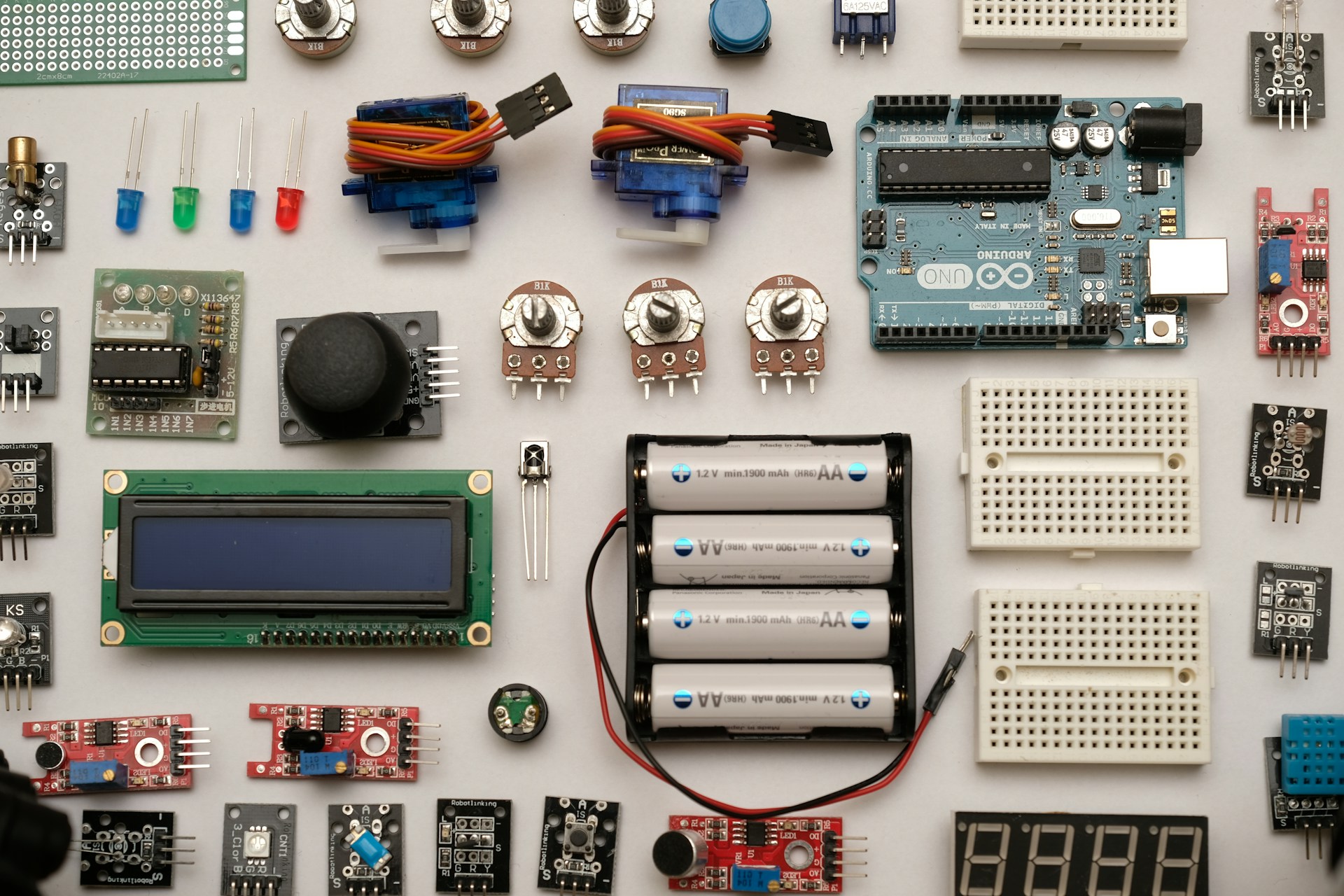
Embedded developers work with a variety of boards and hardware. For example, the photo above shows a collection of microcontroller development boards (such as Arduino/AVR and Raspberry Pi Pico). These platforms are typically programmed in C/C++ and connect to peripherals (sensors, displays, actuators) via interfaces like I²C, SPI and UART. Engineers may also use hardware simulators or logic analysers to test and optimise firmware during development.

Tools, Languages and Platforms
- Automotive: Each modern car integrates multiple microprocessors. Besides engine and transmission ECUs, there are controllers for braking (ABS), airbags, infotainment, power steering, and advanced driver-assistance systems (ADAS). As noted, some vehicles have 100+ ECUs (2), illustrating the complexity of automotive embedded software.
- Smart Appliances & Home IoT: Common appliances (washing machines, ovens, HVAC systems) use embedded controllers for timing and control. Smart thermostats (e.g. Nest), security cameras, and home assistants run embedded software to connect with mobile apps or cloud services.
- Industrial Control: Factories employ Programmable Logic Controllers (PLCs) and embedded controllers to automate machinery, control robotics, and monitor processes. These systems often run in hard real-time to ensure safety and uptime.
- IoT & Wearables: Many Internet of Things (IoT) devices from environmental sensors and fitness trackers to agricultural monitors are effectively embedded systems. They typically include a microcontroller, a radio (Wi-Fi/Bluetooth/LoRa), and sensor interfaces, all powered by firmware that might send data to the cloud.
- Medical Devices: Critical medical equipment (heart-rate monitors, insulin pumps, imaging systems) embeds dedicated firmware for precise measurement and control, often under strict safety certification.
Challenges and Complexities
Embedded development is more complex than general software development. Engineers must manage severe resource constraints: microcontrollers may have only kilobytes of RAM and run at tens of MHz, so code must be highly optimised for size and speed. Real-time requirements add difficulty, an embedded task may need to respond to a sensor input or interrupt within microseconds or risk system failure. Hardware–software integration is another challenge: firmware must interface correctly with peripherals, handle noisy signals, and often meet industry specific safety or regulatory standards. Additionally, testing embedded systems can be tricky, since developers often use hardware in the loop simulators or on device debugging rather than standard software debuggers. All these factors mean embedded projects demand careful planning, low-level expertise, and rigorous testing. But with good design practices and tools, teams can deliver reliable, efficient firmware that unlocks new product capabilities.
Why GB Logical for Embedded Development
At GB Logical, we have deep expertise in embedded firmware and software. Our engineers are proficient in Embedded C/C++ development on microcontrollers, and also skilled in Linux-based development for single-board computers. We understand the intricacies of real-time programming, low-level hardware interfaces, and the constraints of embedded hardware. Whether your project involves automotive ECUs, smart IoT devices, industrial controllers or any other embedded application, our team can deliver robust, efficient solutions.
Learn more about our Embedded System Development services and how we can support your next project. We combine industry best practices with practical experience to bring complex embedded products to life.